Custom WordPress Themes.
We build lightweight WordPress themes around your design, content structure and technical requirements.
Using Gutenberg, ACF and modular components, we create flexible platforms that are fast, easy to edit and ready for continued development.
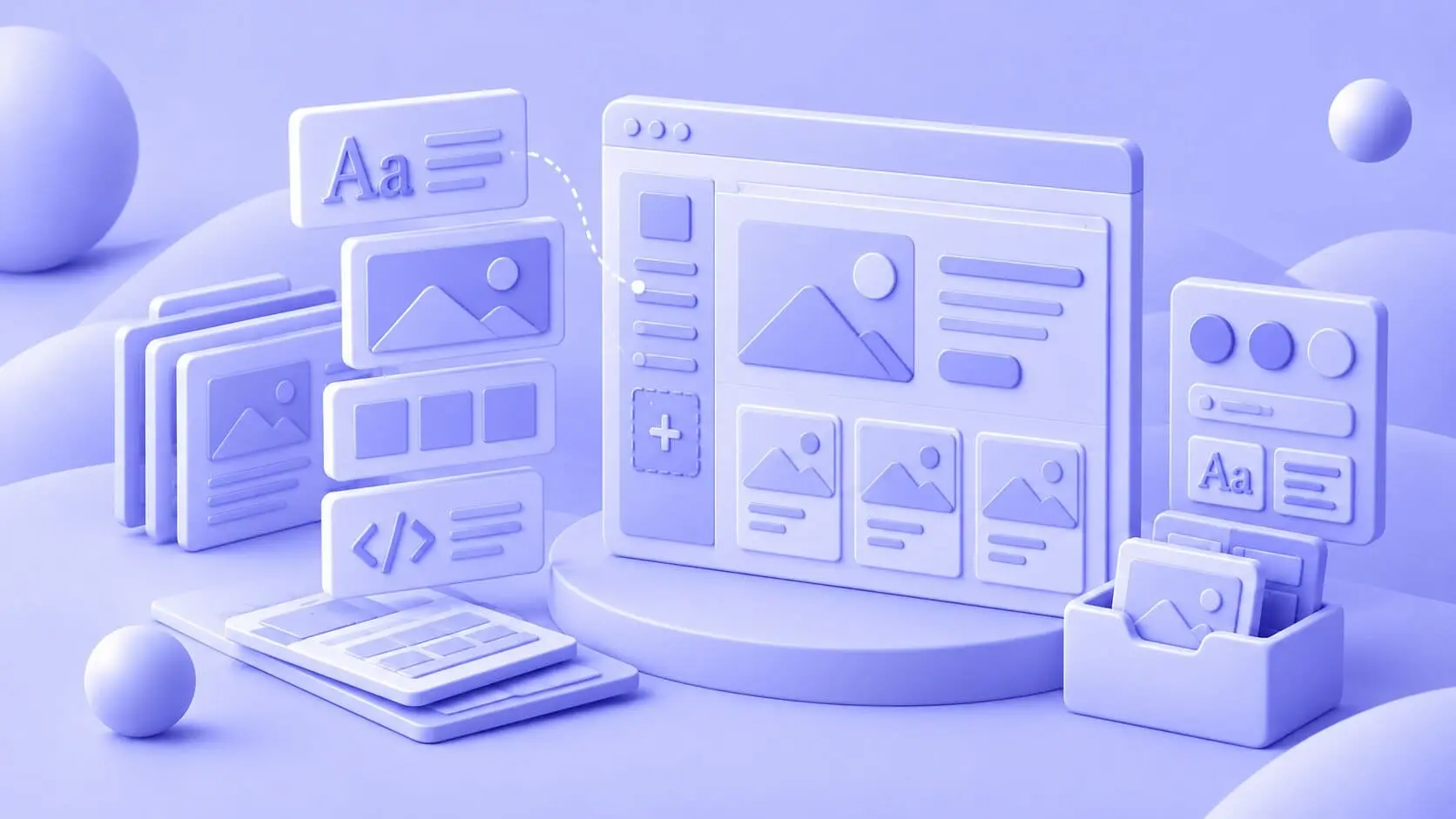
CUSTOM WORDPRESS THEMES
A custom WordPress theme is built around the actual website rather than adapted from a ready-made template. We develop the frontend, templates and reusable components specifically for the project, without relying on heavy page builders or functionality the site does not need. That gives us tighter control over responsive behaviour, accessibility, performance and technical SEO, while keeping the codebase easier to maintain and develop further.
The same approach applies to the editing experience behind the site. Using Gutenberg, ACF and structured content, we create modules and templates that match the way the content needs to be managed. Editors can build and update pages without touching code, while the theme keeps layouts and design rules consistent. The result is a setup that gives content teams useful flexibility without turning every page into a completely free-form builder.
Built around your
visual identity.
Reusable sections for editors.
Lean frontend, less overhead.
Clean, semantic structure.
Built to evolve
over time.
OUR PROCESS
From design system to editor-ready WordPress theme.
A custom theme starts with understanding how the website should look, how the content should be structured and how editors need to work with it once it is live.
WHY CUSTOM
More control over how the site looks, works and grows.
A custom theme gives us control over both the visitor experience and the editorial setup behind it. That becomes especially valuable when design, content structure or technical requirements go beyond what a standard theme handles well.
Design without template constraints
The frontend can follow the actual design system rather than adapting it to layouts already defined by a third-party theme.
Components, interactions, responsive behaviour and visual details are developed specifically for the project.
An editor experience built around your content
Different websites need different ways of managing content.
We can structure modules, fields, page types and templates around the way your team works, giving editors useful flexibility without requiring them to manage code or rebuild layouts manually.
A cleaner foundation for future development
A theme built around the requirements of the platform gives developers more control over the codebase and its dependencies.
New sections, functionality, languages and integrations can then be added to a structure that was designed to evolve with the website.
A custom theme is only one layer of the WordPress setup.
Theme development often connects with functionality, integrations, performance, infrastructure and the ongoing operation of the platform. These expertise areas cover the technical layers around the theme.
Rebuild the theme while keeping what still works.
An older theme can become the limiting factor in an otherwise useful WordPress setup.
We can rebuild the frontend and theme architecture while retaining suitable content, data and backend structures, or include theme development as part of a larger CMS migration.
Add functionality without loading the theme with business logic.
When a website needs functionality beyond presentation and content management, a custom plugin can keep that logic separate from the theme.
We develop WordPress plugins around specific workflows, features and business requirements while keeping the wider platform maintainable.
Connect the WordPress platform to the systems around it.
A custom theme can provide the interface while WordPress exchanges data with CRM, ERP, PIM, marketing and other external systems.
We build API integrations around reliable data flows, authentication, error handling and the requirements of the wider platform.
Build speed and stability into the wider setup.
A lightweight theme helps reduce unnecessary frontend overhead, while performance and security also depend on caching, infrastructure, access control and monitoring.
We work across those technical layers to keep WordPress platforms fast, stable and protected.
Give demanding WordPress platforms the infrastructure they need.
As traffic, integrations and technical requirements grow, the hosting environment becomes an increasingly important part of platform performance.
We work with scalable cloud infrastructure, monitoring, backups and DevOps-driven operations for WordPress setups with more demanding requirements.
Keep the theme and platform healthy after launch.
WordPress, plugins, dependencies and surrounding systems continue to change after a website goes live.
Our maintenance work covers controlled updates, testing, monitoring and technical optimisation so the platform remains stable and maintainable over time.
Custom WordPress themes in practice.

FAQ
Questions about custom WordPress themes.
A custom theme affects design, editing, performance and future development. Here are some of the questions we often cover when planning one.
A custom theme is built around the requirements of your website rather than the feature set of a ready-made theme.
That gives us more control over the frontend, content structure, performance and editor experience while avoiding code and functionality the website does not need. It also makes it easier to structure the platform around future development rather than adapting every new requirement to a third-party theme.
Yes. We work with Gutenberg, ACF and structured block-based approaches depending on the requirements of the project.
The important part is defining a content model and editing experience that fits the website. Some projects benefit from native Gutenberg blocks, while others require ACF-powered modules, custom post types or a combination of approaches.
Yes. The theme can be built with reusable modules, templates and structured fields that allow editors to create and update content themselves.
The amount of freedom can be adjusted to the project. Some teams need a broad module library for creating many different pages, while others benefit from more controlled templates where the design stays consistent automatically.
We keep the frontend focused on what the website needs and avoid unnecessary theme and page-builder overhead.
Performance also depends on the wider WordPress setup, including asset loading, images, caching, database behaviour, hosting and third-party scripts, so these areas are tested alongside the theme rather than treated separately.
Yes. The theme can present content and functionality while WordPress connects with systems such as CRM, ERP, PIM, marketing platforms and other external services.
Where more advanced data exchange is needed, the integration can be handled separately through APIs or custom plugins so the theme remains focused on presentation and the editing experience.


