DEVELOPMENT • WORDPRESS • HEADLESS

Headless WordPress
for advanced
frontend setups.

Headless WordPress separates the content backend from the frontend, giving development teams full control over how content is structured, delivered, and rendered. It is the right architectural choice when design, performance, or integration requirements go beyond what a traditional WordPress setup can support.

At Webnorth, we build headless WordPress solutions for organizations that need a stable, well-structured content backend and the freedom to build the frontend without CMS constraints.

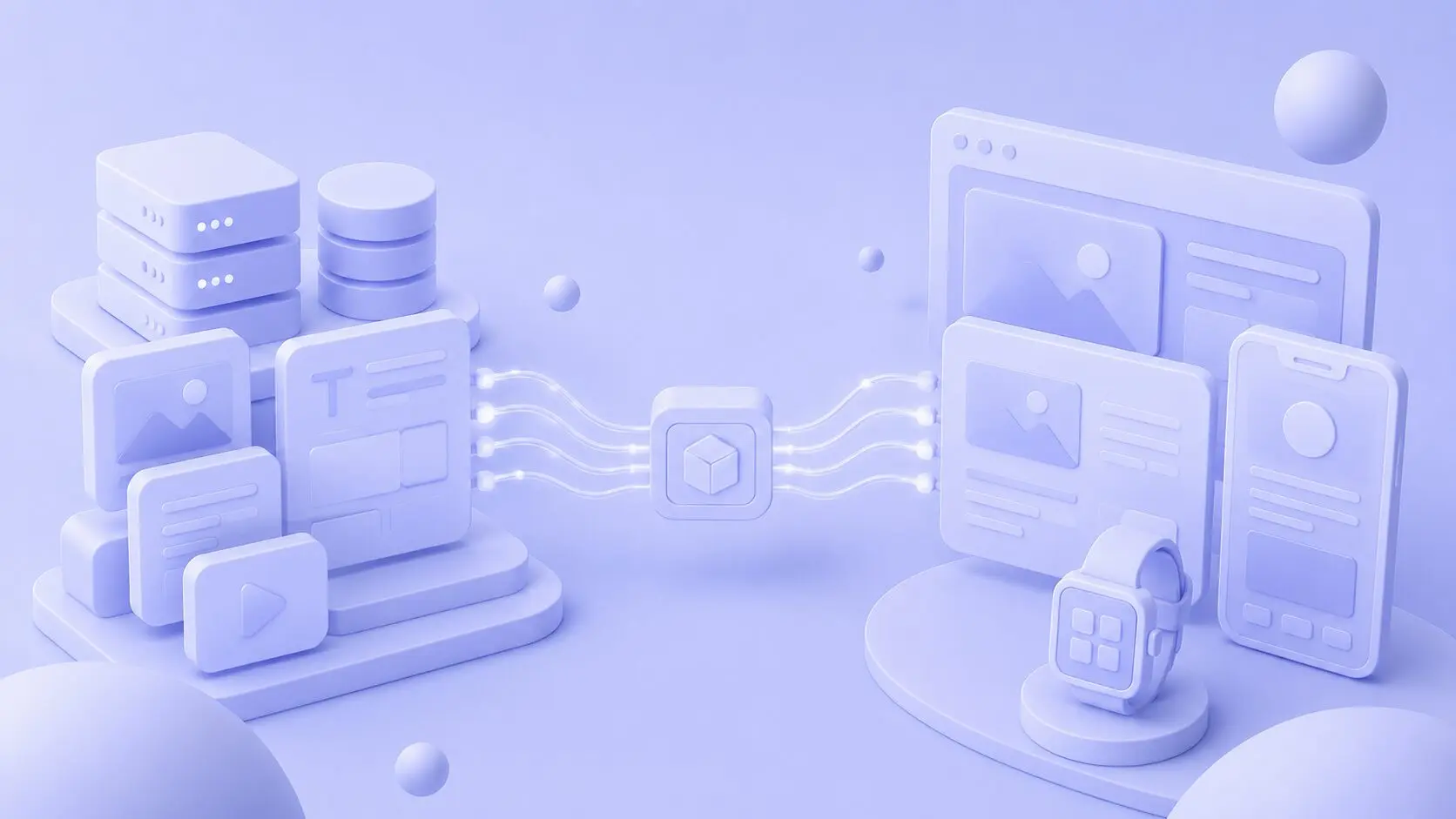
3D illustration of a headless architecture connecting backend content systems with websites, mobile apps, and wearable devices.

WHY HEADLESS

What a decoupled architecture makes possible.

A decoupled architecture gives organizations more control over how content is built, delivered, and maintained across different digital surfaces.

At Webnorth, we build the WordPress backend and API layer with the same technical discipline as the frontend, so both sides of the solution hold up over time.

Full frontend freedom
When the frontend is decoupled from WordPress, design and interaction requirements drive the build rather than the limitations of a theme or page builder.

The development team can work in the framework that best fits the project without compromising the content structure or editorial workflows in WordPress.
Content across multiple surfaces
A single WordPress backend can serve content to a public website, a mobile app, an intranet, or any other platform through a shared and consistently structured API layer.

This removes the need to manage separate content sources for each surface, reducing duplication and keeping content consistent across the organization.
Reduced attack surface
Because the WordPress backend is not directly exposed, it avoids the traffic patterns and request volumes that often create vulnerabilities in standard WordPress setups.

The result is a more controlled security model where CMS access is separated from content delivery.
Independent deployment cycles
Frontend and backend run as separate systems, allowing updates, design changes, and new features to be released independently.

This makes development more predictable and reduces the impact of individual changes.

TECHNICAL FOUNDATION

The technical layers behind a headless WordPress solution.

A headless project spans more than the visible frontend. The content layer, API surface, editorial workflow, and deployment architecture all require deliberate decisions before development begins.

At Webnorth, we work across every layer, from content modeling in WordPress to frontend deployment and ongoing API maintenance.

A Headless solution typically includes the following areas:

  • WordPress as headless CMS WPGraphQL REST API
  • Next.js frontend development Static generation (SSG) Incremental Static Regeneration (ISR)
  • Server-side rendering (SSR) ACF content modeling Custom post types and taxonomies
  • Gutenberg block structure Editor preview in decoupled setup Authentication and role management
  • CDN-delivered frontend Google Cloud backend hosting Webhook integrations
PERFORMANCE

Performance built into the architecture, not configured afterwards.

A statically generated or ISR-cached frontend served from a CDN removes PHP execution from the page load path. The WordPress backend handles content management only and is not exposed to end-user traffic.

At Webnorth, performance is an architectural decision made in planning, not an optimization pass applied after launch.

Core Web Vitals
Lean frontend without unused code
Scalability
Frontend and WordPress scale independently
TTFB
Frontend served from CDN edge nodes
Security
Backend kept away from public traffic

CONTACT US TODAY

Considering a headless project and need help evaluating it?


    PROCESS

    From architecture decision to stable launch.

    A headless project requires technical decisions before design begins. Content model, API surface, rendering strategy, and deployment architecture are defined in planning so that development can move without ambiguity.

    1
    3D illustration of a connected digital workflow with analytics, cloud systems, integrations, scheduling, and process management tools.
    Discovery
    We map content requirements, integration needs, and frontend constraints for the specific project.

    This is also where we assess whether headless is architecturally justified, or whether a well-structured custom WordPress theme would deliver the same outcomes with less operational overhead.
    2
    3D illustration of a digital product development workflow with wireframes, UI design, coding, integrations, and system architecture.
    Architecture planning
    We define the content model, API surface, and rendering strategy before any design work begins.

    This includes decisions on static generation, ISR, or server-side rendering, and how the WordPress backend and frontend will be hosted, deployed, and maintained as separate systems.
    3
    3D illustration of a layered digital infrastructure with connected databases, cloud systems, workflows, and content management components.
    Design and technical alignment
    We review the design direction alongside the planned technical structure to confirm the frontend can be realized without compromising performance, editorial workflows, or API integrity.

    Catching misalignments at this stage prevents costly adjustments during development.
    4
    3D illustration of a content-to-code workflow connecting design layouts, frontend development, and modular interface components.
    Development
    We build the WordPress backend, content types, and API layer in parallel with the frontend, with clear handoff points and shared documentation throughout.

    Both sides are developed with the production deployment environment in mind from the start.
    5
    3D illustration of a WordPress platform connected to plugins, cloud services, databases, code integrations, and content management tools.
    QA and preview testing
    We test editorial preview flows, API responses, frontend rendering across devices, and the full deployment pipeline before anything moves to production.

    This includes verifying that content editors can publish and preview accurately from within the WordPress admin.
    6
    3D illustration of a website monitoring and optimization workflow with security, performance tracking, audits, and responsive platform management.
    Launch and ongoing operations
    We handle a controlled launch across both layers and can continue supporting the solution through a service agreement covering WordPress backend updates, plugin and API maintenance, security monitoring, and frontend deployment support through a shared service board.
    RELATED SERVICES

    When the solution needs more than headless alone

    WordPress can serve as the technical foundation for many types of digital solutions. When a project requires capabilities beyond a standard headless setup, we work across specialized areas including enterprise architecture, API integrations, multisite, and agency partnerships.

    Choose the area that best fits your next step.

    Multiple websites managed in one WordPress solution.

    For organizations with multiple brands, departments, countries, campaign sites, or language versions where management needs to be centralized without losing local flexibility.

    AFTER LAUNCH

    A dedicated service team for your headless solution.

    A headless solution has two layers to maintain after launch: the WordPress backend and the frontend deployment. At Webnorth, our service agreement covers both, including WordPress updates, API maintenance, security monitoring, and frontend deployment support.

    Tasks are managed through a shared service board, giving clear visibility into status and priorities across both sides of the solution.

    Learn more about our service agreement
    WordPress - Maintenance & Support - Link

    What our customers say about Webnorth.

    A high-performance solution only creates value when it supports the business behind it. We measure success through the stability and growth it produces for our clients.

    TECHNICAL WORDPRESS PARTNER

    Why choose Denmark’s leading WordPress agency?

    We have set out to redefine what businesses can expect from a technical partner. Learn more about our philosophy, our position in the Danish digital landscape, and why IT managers and marketing directors choose us when the solution needs to work right the first time.

    Learn more
    Denmarks-Leading-WordPress-Agency-Link

    TECHNICAL ASSESSMENT

    Get a concrete assessment of your current setup.

    If you have an existing WordPress solution and are evaluating whether a headless architecture makes sense, Webnorth’s Tech Lead and Senior Developer can review the current codebase, content structure, and integration requirements.

    The output is a clear picture of what a headless migration would involve, what it would require operationally, and whether the architectural shift is justified for your specific situation.

    Get a technical assessment
    SOLUTIONS AND EXPERTISE

    WordPress solutions for Multisite and beyond.

    We work with WordPress across a range of solutions and technical disciplines. From headless architectures and enterprise platforms to API integrations, cloud hosting, and custom theme development, WordPress serves as the technical foundation across all of them.


    Here you can explore the areas most relevant to your next step.

    FAQ

    Questions about headless WordPress

    Here you’ll find answers to common questions organizations ask when considering headless architecture, decoupling WordPress, or choosing the right technical direction for a new project.